Cheap, Mid, and Splurge: What the Price Tag on Your CBD Is Actually Telling You

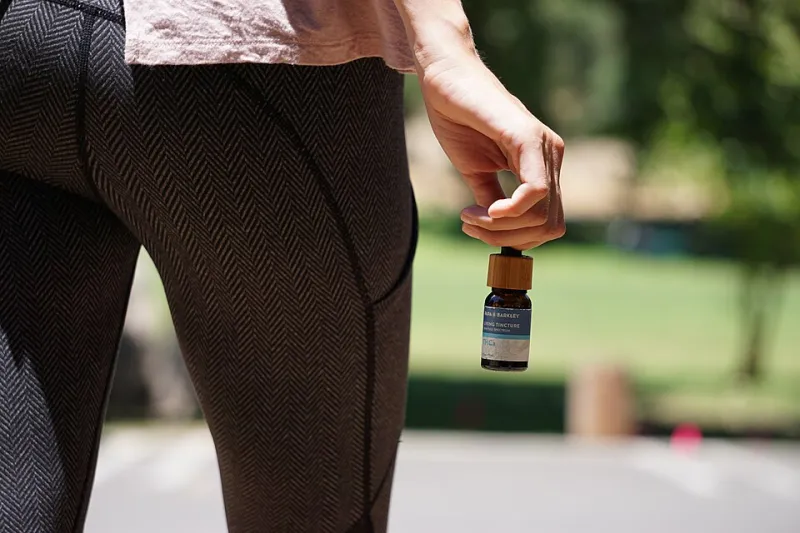
Photo: two dropper bottles of CBD oil side by side with price tags on retail shelf, via img.freepik.com
Two bottles. Same shelf. One is $12, one is $72. Both say CBD on the front, both promise roughly the same thing, and both are in your hand because you've heard this stuff might help you sleep.
The lazy answer is that the expensive one is better. The contrarian answer is that the expensive one is a scam. Neither is reliably true, and both are ways of avoiding the actual question: what is each dollar buying?
So let's take the bottle apart.
Where the money actually goes
Strip away the branding and a CBD product's cost is roughly a stack of these:
Raw hemp and cannabinoid content. This is the biggest single variable. Full-spectrum extract with real cannabinoid load is not cheap to produce. A gram of purified CBD isolate and a gram of terpene-rich full-spectrum extract from a carefully grown field are different price categories entirely.
Extraction method. CO2 extraction uses expensive equipment and slow cycles. Ethanol extraction is faster and cheaper but grabs more unwanted plant material that has to be cleaned up later. Olive-oil maceration is the low-tech, low-cost route — fine for small artisan batches, hard to standardize at scale.
Post-processing. Winterizing, decarboxylation, distillation, and chromatography all add cost. So does the decision not to distill, which is how you keep minor cannabinoids and terpenes in the final product.
Third-party testing. A full panel — potency plus heavy metals, pesticides, residual solvents, microbials, mycotoxins — runs a brand a few hundred dollars per batch. Multiply that across SKUs and batches and it becomes a real line item. This is one of the fewupcharges that directly benefits you.
Packaging. Amber glass, dropper assemblies, child-resistant closures, nitrogen flushing, tamper seals, and a printed carton are not free. They also aren't the reason a bottle costs $72.
Compliance and licensing. State hemp licenses, seed-to-sale documentation, insurance, and legal review all cost money in the background.
Retail markup. Wholesale-to-retail markups in the supplement space frequently run around double. A $36 wholesale bottle lands on a shelf near $72. That's not gouging — that's how physical and online retail works — but it means the retail price is never a direct readout of ingredient quality.
Brand storytelling. Photography, influencer seeding, packaging design, paid social, and the copy on the back of the box. This is where the widest, least measurable spread lives.
What a $12 bottle usually is
Sometimes it's honest. A straightforward CBD isolate product at modest potency, sold direct with minimal packaging, can land in that range and be exactly what it says it is. If the label states CBD per serving and the brand posts a batch-matched COA, a cheap bottle can be a perfectly reasonable buy.
More often, a $12 bottle is one of these: very low total potency dressed up with a big front-of-label milligram number, a hemp seed oil product with no meaningful cannabinoids, a proprietary blend that hides every quantity, or a product with no testing you can verify. Cheap isn't a crime. Unexplained cheap usually is.
The middle tier where most people should shop
The $30 to $50 range is where full-spectrum products, per-batch testing, and sane potency tend to overlap. You're paying for extraction and lab work without paying for a photo shoot in Topanga. This is also the range where you can afford to experiment with dose and format without feeling like you've made a commitment.
What the $72 bottle is really selling
Sometimes all of it is real: higher cannabinoid content per bottle, solvent-free extraction, organic certification, small-batch production with frequent testing, a verified minor-cannabinoid profile, a specific terpene blend, and a manufacturing standard you can audit.
Sometimes it's glass, gold foil, a serif font, and a founder story. Those things cost money. They just don't change what's in the dropper.
The tell is almost always the same: does the premium product show you the numbers? A brand charging premium prices and publishing batch-matched lab reports is earning the markup. A brand charging premium prices and publishing a mood board is not.
Do the math that actually matters
Cost per milligram of CBD is the only fair comparison across bottles, and it takes fifteen seconds.
| Bottle price | Total CBD in bottle | Cost per mg |
|---|---|---|
| $12 | 150 mg | $0.08 |
| $48 | 1,200 mg | $0.04 |
| $72 | 500 mg | $0.14 |
Look at that again: the cheapest bottle has the worst cost per milligram, and the mid-priced one wins. This happens constantly. Price per bottle and price per milligram are barely related, because the front-of-pack milligram number doesn't always reflect what you're getting.
Once you have cost per milligram, layer in the qualitative stuff: is the COA batch-matched and recent? Does the label state CBD per serving? Is the THC level disclosed? Those three answers will separate the tiers faster than any price tag.
When premium is worth it
- You're sensitive to trace THC and need to see exact test results for every batch.
- You care about how the hemp was grown and want organic certification you can verify.
- You want specific minor cannabinoids — CBG, CBC, CBN — confirmed at real quantities rather than listed as marketing.
- You've already found your dose and you're buying a large-format bottle you'll finish.
When it isn't
- You're brand new and haven't found your dose yet. Buy small, even if the per-milligram math hurts.
- You want a simple daily product and the mid tier already checks the boxes.
- The premium bottle's advantages are all visual.
The pre-checkout checklist
Calculate cost per milligram. Confirm the COA matches your lot number. Check that the label states CBD per serving. Look at the harvest or manufacture date. Read the return policy. That's it — five things, and shelf appeal stops working on you.
Expensive CBD isn't automatically better and cheap CBD isn't automatically fake. But between two bottles, the one that shows you its lab work is nearly always the better spend — whatever the sticker says.