Your Brain Is Already Half Convinced: The Neuroscience Behind CBD's Real-and-Imagined Effects
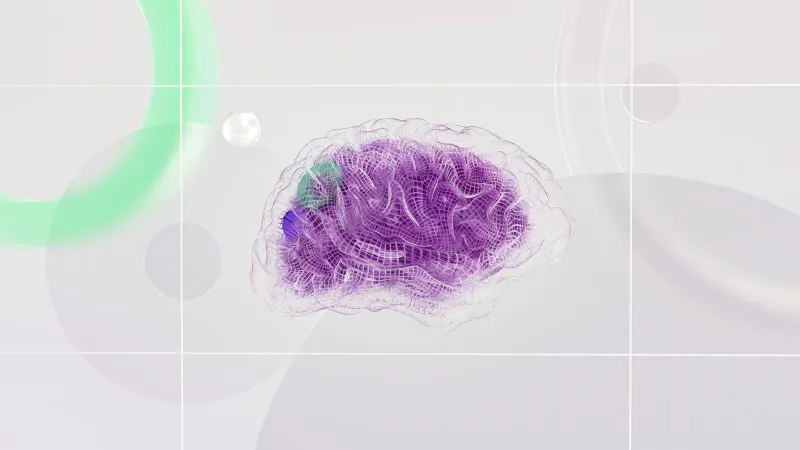
Let's get one thing out of the way: calling something a "placebo effect" is not the same as calling it fake. That framing has done a lot of damage in wellness conversations, especially around CBD. The moment someone says "it's probably just placebo," the implication is that nothing real happened—that you were fooled, or worse, that you fooled yourself.
But neuroscience has been quietly dismantling that assumption for years. And recent research involving CBD specifically is pushing the conversation into genuinely fascinating territory.
What Your Brain Is Actually Doing Before You Even Open the Bottle
Here's the short version of how your brain processes incoming experiences: it doesn't wait for evidence. It predicts.
Your nervous system is constantly running probabilistic models based on past experience, context, and expectation. When you take a medication—or a supplement—your brain starts generating an anticipated response before the compound has had time to act. This is called predictive coding, and it's not a bug. It's one of the most energy-efficient features your brain has.
The result? Your body often begins responding to the expectation of a substance before the substance has fully entered your bloodstream. Endorphins can release. Cortisol can drop. Pain signals can quiet down. These are measurable, physiological changes—not imaginary ones.
So when someone takes CBD and feels calmer within ten minutes, is that the cannabidiol doing the heavy lifting, or is it the brain's anticipatory response? The honest answer is: probably both, and separating them cleanly is harder than anyone wants to admit.
The Study That Changed the Conversation
A growing body of research has started examining what happens when people know they're taking CBD versus when they don't. Classic double-blind placebo-controlled trials try to eliminate expectation by keeping participants in the dark. But a newer wave of studies has flipped that approach—testing whether informed expectations actually enhance or alter CBD's measurable effects.
What researchers keep finding is surprising: participants who are told they're receiving CBD and actually receive it tend to show stronger outcomes than participants who receive CBD without knowing it. The expectation appears to amplify the pharmacological signal, not replace it.
This is sometimes called the "open-label placebo" phenomenon—and it's been documented across pain management, anxiety research, and sleep studies. The brain's prediction system and the compound's actual biological activity seem to work synergistically. Neither one is doing it alone.
CBD's Actual Mechanisms: Not Nothing
It's worth being clear about what CBD is doing on a biological level, because the placebo conversation can sometimes inadvertently minimize real pharmacology.
CBD interacts with the endocannabinoid system—a regulatory network that influences mood, stress response, inflammation, and sleep architecture. It modulates CB1 and CB2 receptors, though indirectly. It also interacts with serotonin receptors (specifically 5-HT1A), TRPV1 channels involved in pain perception, and adenosine receptors that play a role in sleep-wake cycles.
These are not subtle or theoretical interactions. They're measurable. The FDA approval of Epidiolex—a CBD-based drug for epilepsy—exists precisely because these mechanisms produce outcomes that outperform placebo in rigorous clinical settings.
So the question isn't really "is CBD doing something real?" It's more nuanced than that: how much of what you personally experience is driven by biology, and how much is shaped by expectation—and does the distinction actually matter for your wellness goals?
Why This Actually Helps You Evaluate Your Own Experience
Here's where this gets practical.
A lot of people abandon CBD too quickly because they're waiting for some unmistakable, pharmaceutical-grade signal that it's "working." They want a light switch moment. But CBD typically doesn't operate that way. Its effects tend to be gradual, cumulative, and deeply personal—which makes them easy to second-guess.
Knowing that expectation and biology are both contributors doesn't mean you should just believe harder and hope for the best. It means you should be intentional about how you set up your experience. A few things that actually matter:
Consistency matters more than dose. The endocannabinoid system responds to sustained input. Occasional use gives your brain less to predict and your receptors less to adapt to.
Context shapes outcomes. Taking CBD in a calm, intentional moment—rather than frantically right before a stressful situation—gives both your predictive system and your biology a better environment to work in.
Tracking is underrated. Because CBD's effects are subtle, they're easy to miss in the moment but visible over time. A simple daily log—mood, sleep quality, stress level—cuts through the noise of expectation bias in both directions. You're not just looking for confirmation that it's working; you're building an honest picture.
Product quality changes everything. The placebo-biology synergy only functions if there's actual CBD present in meaningful concentrations. Low-quality products with inconsistent cannabinoid profiles undercut the whole system. Third-party testing isn't optional—it's the baseline.
The Bigger Point: Stop Treating "Placebo" Like a Slur
One of the more counterproductive habits in wellness culture is using "placebo" as a dismissal. As if the brain producing real, measurable physiological changes in response to expectation is somehow less valid than a compound triggering the same changes directly.
Your brain is an active participant in every wellness intervention you try—not a passive recipient. That's not a limitation. That's leverage.
CBD, used thoughtfully, gives that system something real to work with. The expectation you bring to it, the routine you build around it, the quality of the product you choose—all of these shape outcomes in ways that are genuinely meaningful, even if they're harder to quantify than a blood draw.
At Fleex CBD, we think the goal isn't to outsmart your brain's prediction system. It's to work with it—consistently, intentionally, and with products that hold up their end of the deal.
Because when your biology and your expectations are pointing in the same direction? That's not placebo. That's just wellness doing its job.


