Train Hard, Recover Smarter: Why Hemp Is Becoming Every Athlete's Secret Weapon
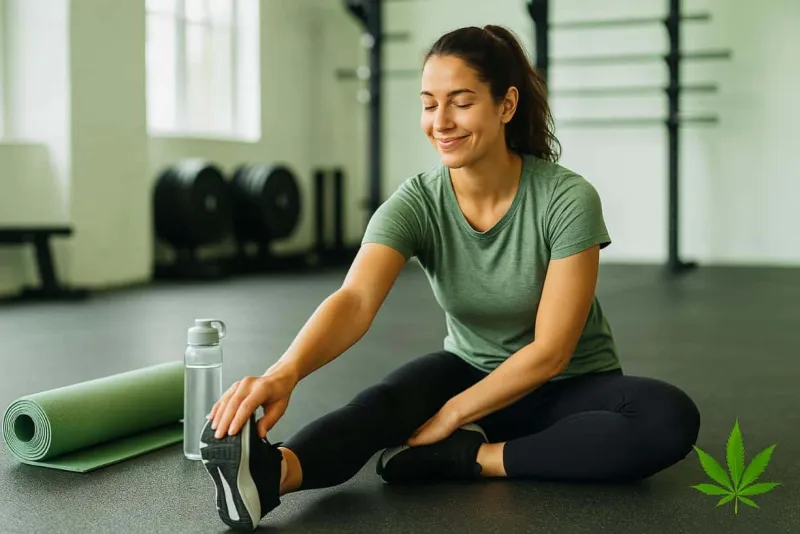
Photo: athlete stretching after workout with hemp wellness product, via media.chronicguru.com
If you've spent any time in a gym locker room, scrolled through a fitness influencer's story, or even just chatted with your running buddy lately, there's a good chance CBD has come up. Not in a sketchy, under-the-table kind of way — more like the casual, "oh yeah, I've been using a hemp tincture after leg day and it's been a game-changer" kind of way.
That shift in conversation is real. And it's happening fast.
Athletes at every level — from the 5 AM CrossFit crew to the Sunday morning yoga crowd to the serious marathon trainers logging 50-mile weeks — are turning to hemp-derived CBD as part of their post-workout toolkit. The appeal isn't just the wellness buzz. It's the idea of a clean recovery option that doesn't come with a laundry list of side effects or a complicated relationship with your body.
So what's actually going on here? Let's break it down.
What Happens to Your Body After a Tough Workout
Here's a quick refresher on the biology. When you push your muscles hard — whether that's heavy squats, a long bike ride, or a HIIT class that left you on the floor — you're creating microscopic tears in muscle tissue. Your body's inflammatory response kicks in to repair those tears, which is how muscles grow stronger. But that same inflammation is also why you're walking funny two days after leg day.
Delayed onset muscle soreness (DOMS) is that familiar ache that peaks around 24–72 hours post-exercise. It's not dangerous, but it can seriously mess with your training consistency. When soreness stacks up faster than your body can recover, performance drops and motivation tends to follow.
This is exactly where CBD enters the conversation.
The Science Behind CBD and Muscle Recovery
CBD — cannabidiol — is a non-psychoactive compound derived from the hemp plant. Unlike THC, it won't get you high. What it does do is interact with your body's endocannabinoid system (ECS), a regulatory network that plays a role in managing pain perception, inflammation, sleep, and stress response.
Research is still evolving, but a growing body of studies suggests that CBD may have meaningful anti-inflammatory properties. A 2020 review published in Sports Medicine noted that CBD's interaction with ECS receptors could potentially modulate inflammatory signaling — which is exactly what an overworked athlete needs. Other research points to CBD's possible role in supporting sleep quality, which is arguably the single most important variable in athletic recovery.
And sleep? That's where the real rebuilding happens.
More rest, less systemic inflammation, and a calmer nervous system after a grueling workout — that's the trifecta athletes are chasing. CBD seems to check all three boxes, at least anecdotally, and increasingly in the lab too.
Real People, Real Routines
Take Marcus, a 34-year-old recreational cyclist from Denver who started incorporating a CBD oil tincture into his post-ride routine about a year ago. "I used to rely on ibuprofen pretty heavily after long climbs," he says. "I was taking it almost every weekend. My doctor mentioned it wasn't great for my gut long-term, so I started looking for alternatives. CBD was almost accidental — a friend suggested it. Now I take it with my protein shake after a ride and honestly, my recovery feels noticeably smoother."
Or consider Priya, a 28-year-old yoga instructor and occasional powerlifter from Austin who uses a CBD topical balm on her lower back and hips after heavy lifting sessions. "I was skeptical at first," she admits. "But I kept seeing it in the wellness space and finally tried it. I don't know exactly how to explain it, but my muscles feel less angry the next morning. I sleep better too, which probably helps everything."
These aren't outliers. Across fitness communities on Reddit, in Facebook groups, and in gym locker room chats, the same themes keep emerging: less reliance on OTC pain meds, better sleep, and a sense of faster turnaround between hard sessions.
Let's Talk About the Drug Testing Question
This is the one that makes a lot of competitive athletes pause — and understandably so. The concern usually sounds something like: "I don't want to fail a drug test over a CBD product."
Here's the honest answer: pure CBD itself is not on the World Anti-Doping Agency (WADA) prohibited list, and the same goes for most US athletic organizations. THC is the compound that raises flags. The issue is that some low-quality CBD products contain trace amounts of THC above the legal 0.3% threshold — or are inaccurately labeled.
This is why sourcing matters enormously. Look for products that are:
- Made from US-grown, hemp-derived CBD
- Third-party lab tested with a certificate of analysis (COA) you can actually read
- Broad-spectrum or isolate formulations, which typically contain zero detectable THC
At Fleex CBD, every product is designed with transparency in mind. Clean ingredients, verified potency, and clear labeling — because your training is too important to gamble with.
Building CBD Into Your Recovery Stack
So how do athletes actually use it? There's no single playbook, but here are the most common approaches:
Post-workout tinctures or capsules: Taken within 30–60 minutes after training, these support systemic recovery and can help ease into a more restful evening. Dosing varies by body weight and individual sensitivity — most people start in the 15–25mg range and adjust from there.
Topical balms and creams: Applied directly to sore muscles or joints for localized relief. Great for targeted areas like knees, shoulders, or lower back after heavy lifting.
Nighttime formulas: Some athletes prefer a higher-dose CBD product before bed to maximize sleep quality and overnight recovery. Think of it as stacking your recovery while you're already offline.
Rest day support: CBD isn't just for the day you train. Using it consistently, even on off days, may help maintain a more balanced inflammatory response over time.
The Guilt-Free Recovery Tool
There's something culturally significant happening in the fitness world right now. People are pushing back against the "no pain, no gain" mentality that treats recovery as weakness. Smart recovery is training. And athletes are increasingly seeking tools that align with a holistic, whole-body approach to performance.
CBD fits that philosophy naturally. It's plant-derived, non-intoxicating, and increasingly supported by both science and community experience. It doesn't dull your edge — it helps you come back sharper.
Whether you're chasing a PR, prepping for your first 5K, or just trying to keep up with your Tuesday spin class without limping through Wednesday, hemp-based recovery might be worth adding to your toolkit.
Your body works hard for you. Maybe it's time to return the favor — a little more intentionally.